
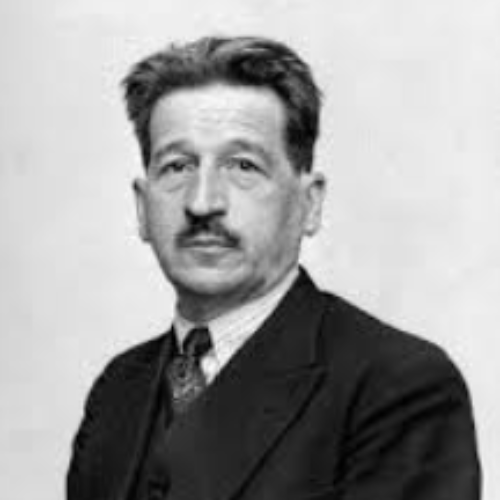
Edmond Locard
One of the pioneers of forensic science was a man named Edmond Locard. In the early 20th century, Locard developed a single-sentence principle that has been the foundation of a lot of forensic science to this day:
“Every contact leaves a trace.”
What does that mean? Well, it’s actually a pretty simple concept when you really think about it. Every time a person comes into contact with their surroundings, they leave something behind and often, they pick something up from the scene. For example, if a person brushes against a curtain by a window, they might leave a hair or some skin oils, and they might get some fibers from that curtain onto their clothes or even their skin.
Sometimes, this is a pretty obvious exchange. You grab a glass, you leave a fingerprint. Sometimes, it’s a bit more subtle; it’s a smear of DNA caused by bare skin brushing against a table or a wall. But however obvious or hidden this is, it’s something that lets forensic scientists make links they may never have made otherwise.
One of the earliest examples of Locard’s Principle comes from Edmond Locard himself. In 1912, a woman named Marie Latelle was found dead under suspicious circumstances; she’d been strangled to death in the parlor of her parents’ villa. Police suspected her boyfriend, Emile Gourbin, since Marie tended to make him jealous by flirting with other men, but Emile vehemently denied being involved and said he hadn’t even see Marie on the night she was murdered. He even had an alibi! He’d been out with friends at the time of the murder.
The police called Edmond Locard and asked for his help with the investigation. Locard came to do a physical examination of Gourbin’s person. What he found ended up clinching the case against Gourbin.
Under Gourbin’s nails, Locard found tissue from Marie’s neck covered in a pink cosmetic powder. In 1912, usually only women wore makeup, and this specific powder had a chemical makeup that was specifically made for Marie Latelle. This pointed to the fact that Gourbin was lying about seeing Marie the night of her death. When the police told Gourbin about the powder and what it showed, Gourbin confessed to the murder. He said he’d been so angry Marie had refused to marry him, he’d killed her. He had been with his friends and once they were drunk, he’d set the clock ahead so his friends would think they had been with him much later than they really had been.
Without Locard’s principle, and without the physical trace evidence under Gourbin’s nails, that murder would likely never have been solved. Marie Latelle’s murderer was brought to justice because of Locard’s principle. This is one of the first but very, very far from the last time Locard’s principle has been used to help solve cases.
 The Evidence Locker
Leave a comment